
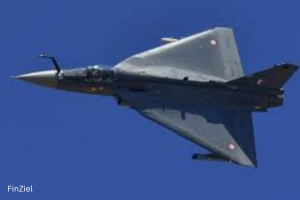
Hindustan Aeronautics Limited (HAL) has informed the Indian Air Force (IAF) that it will deliver five Tejas Mk1A fighter aircraft by June this year, addressing all key issues previously raised by the force, defence sources.
Before formal acceptance, the aircraft will be subjected to a comprehensive evaluation. Their induction into the IAF will be contingent upon the results of this assessment and confirmation that they satisfy the Air Staff Qualitative Requirements (ASQR).
The reported concerns are linked to the aircraft’s radar, Electronic Warfare (EW) suite, and weapon integration systems. However, HAL has asserted that five Tejas Mk1A jets are fully prepared for delivery, stating that key systems including the radar, EW suite, and weapon integration have been completed and meet the required standards.
On October 17, 2025, HAL carried out the maiden flight of the Tejas Mk1A prototype from its Nashik facility, marking a major milestone in the programme’s progress.
The Tejas Mk1A, India’s next-generation light combat aircraft, represents a major step forward in the country’s pursuit of self-reliance in defence aviation.
With 83 aircraft already ordered and approval granted for an additional 97 potentially taking the total beyond 180 the platform is poised to form the core of the Indian Air Force’s (IAF) light fighter fleet.
Despite this progress, a significant strategic concern persists: the aircraft is powered by the GE F404-IN20 engine, which is fully imported from the United States, with no provision for licensed production or substantial technology transfer (ToT) to India.
This complete dependence stands in contrast to the approach adopted for the more powerful GE F414 engine, selected for the upcoming Tejas Mk2 and early variants of the Advanced Medium Combat Aircraft (AMCA).
In the case of the F414, India is pursuing co-production arrangements and seeking up to 80% technology transfer, reflecting a distinctly different strategy for future platforms compared to the current fleet.